


 By
By Mpox Declared Global Health Emergency by WHO
Mpox Declared Global Health Emergency by WHO
The World Health Organisation (WHO) has declared the increasing cases of Monkeypox in Africa a global public health emergency. Monkeypox is now called MPOX. This declaration means there is a higher alert because of the concerning events. The WHO’s choice shows the urgency and possible global impact. It calls for quick action from health groups and governments around the world. The declaration aims to gather resources. It also seeks to help a more effective response to stop MPOX from spreading and lessen its effects.
WHO’s Announcement and Rationale
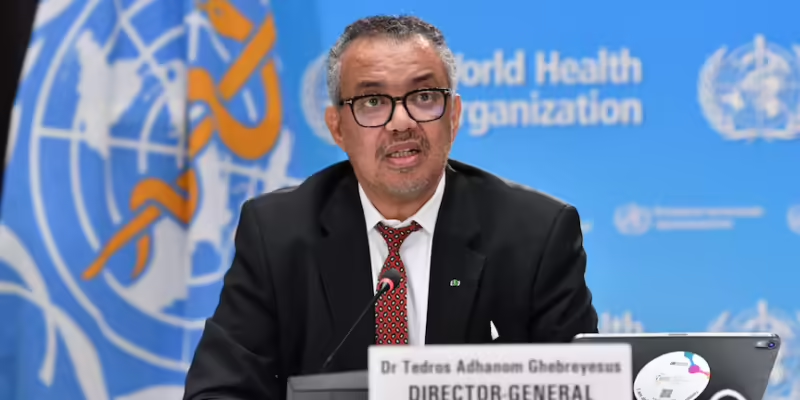
WHO chief Tedros Adhanom Ghebreyesus spoke to the press. He said the emergency committee told him the situation is a public health emergency of international concern. He accepted this advice. This statement shows how seriously the WHO views the MPOX outbreak. The declaration lets the WHO take action and coordinate global responses to handle the health risk. This choice shows the organization’s promise to protect global public health.
Changing Monkeypox to MPOX is to remove stigma and use more inclusive language when talking about public health. The name change avoids possible negative or unfair ideas that the old name might have. This change fits with the WHO’s wider efforts. They want public health messages to be sensitive and respectful. This encourages more cooperation and understanding when facing health problems. The change is to encourage open talk and working together to fight the virus.
Understanding MPOX
MPOX is a virus related to the eradicated smallpox virus. The WHO says the virus spreads through close contact. This includes touching, kissing, or sexual contact. It also spreads through items like sheets, clothes, and needles. Knowing how it spreads is key to setting up good prevention plans. This also helps lower the risk of getting infected. Public awareness plans are important to teach people how the virus spreads. They also teach what actions people can take to protect themselves and others.
The declaration of MPOX as a global health emergency shows how serious the outbreak is. It also shows the need for global action. This lets the WHO gather resources. It can offer help to affected countries. It can also coordinate research to better understand the virus and fight it. It also calls on governments and health groups to focus on MPOX prevention and treatment. This coordinated response aims to control the spread of the virus and protect people.
The rapid spread of MPOX across continents has caused worry. There are concerns it could become a lasting global health threat, especially among vulnerable people. Staying alert and taking action is important to stop the virus from becoming common in new areas. Constant checks and research are needed. This helps understand how MPOX is spreading and create plans to lessen its impact on global public health. Global teamwork is key to facing the problems caused by new diseases.
Symptoms, Prevention, and Treatment
MPOX is related to smallpox, but it is usually less severe. Symptoms include fever, headache, muscle pain, swollen glands, and a rash with fluid-filled blisters. The illness usually lasts two to four weeks. Most people get better without needing special care. However, serious cases can happen. This is especially true for people with weak immune systems, children, and pregnant women. Getting medical help is always advised.
Smallpox vaccines have shown some protection against MPOX [Source needed]. But routine smallpox shots stopped in many countries after the disease was gone. Current work focuses on stopping the outbreak. This involves finding cases early, isolating them, tracing contacts, and giving shots to high-risk groups. These actions are important to stop the virus from spreading more and protect people from infection.
The WHO is working with countries to give advice on MPOX checks, diagnosis, and care. They are also stressing the need for public awareness plans. These plans teach people about the risks and how to protect themselves. Key prevention actions include avoiding close contact with infected people. Also, practice good hand washing and use protective gear when caring for someone with MPOX. These efforts help people make good choices. They also help them take steps to prevent the virus from spreading.
Global Response and Future Strategies
The global response to the MPOX outbreak shows how connected public health is. It also shows the need for global teamwork to face new diseases. This involves sharing information and coordinating resources. It also means using joint plans to fight the virus’s spread. Constant checks and research are key. This helps understand how MPOX is spreading and create good plans to prevent future outbreaks.
Good plans to prevent future outbreaks include making surveillance systems stronger. They also include improving diagnosis skills and creating shot programs. Investing in research to better understand the virus and how it spreads is also important. Global cooperation and sharing information are vital. This helps coordinate global efforts to face new diseases and protect public health.
Conclusion
The WHO’s declaration of MPOX as a global health emergency shows the urgent need for coordinated global action. The virus’s quick spread and its possible impact on people require action to prevent and treat it. Constant checks, research, and public awareness plans are important. They help face this new global health threat and prevent future outbreaks.
Update: It’s important to note that on May 11, 2023, the WHO Director-General declared that mpox no longer constitutes a Public Health Emergency of International Concern (PHEIC), citing a significant decline in cases (WHO). However, the WHO continues to monitor the situation closely (WHO Fact Sheet).
Support our journalism
You've just read one of our articles. We work to deliver accurate, independent reporting that holds power to account and gives a voice to the stories that matter. That work depends on readers like you.
- Your contribution helps us keep our reporting free and accessible to everyone.
- We don't hide behind a paywall—we rely on the support of our community.
- Every amount, large or small, helps us produce more of the journalism you value.
Make a donation:
Donations are voluntary and non-refundable. By donating, you agree to our Terms & Conditions and Privacy Policy.


